Ramanujacharya
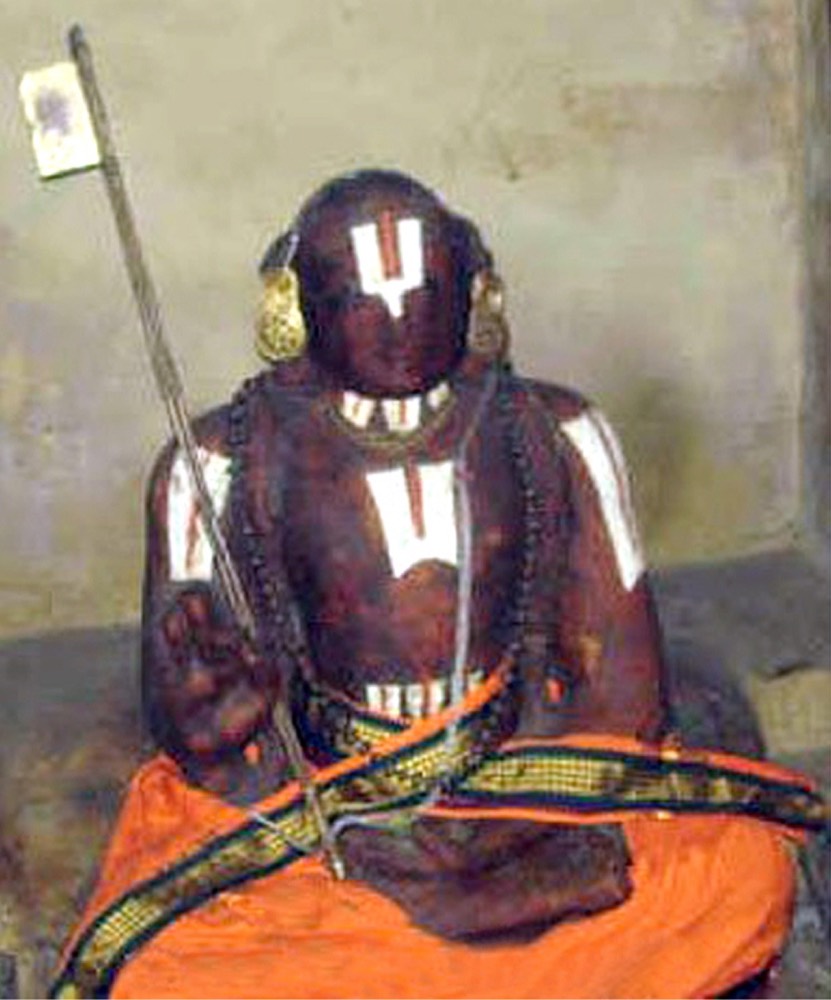
You’ve heard of Shankara’s Advaita philosophy and Madhva’s Dvaita take.
But did you know there’s a bold middle path?
Meet Ramanujacharya, who gave us Vishishtadvaita – the school of special non-dualism.
Born in 11th century Tamil Nadu, Ramanuja lived across the 11th and 12th centuries, placed right between Shankara and Madhva in both time and thought.
After marrying young and losing his father, he began studying under an Advaita teacher, Yādava Prakāśa, at Kanchipuram. But their sharp disagreements on the Nature of God & Reality made Ramanuja walk away.
His brilliance caught the eye of Yāmunācārya, a Vaishnava guru who was from Srirangam. Though he passed away before Ramanuja could learn directly from him, the disciple did fulfil his final wish by beginning his association with his disciples: revive & spread the Śrī Vaiṣṇava tradition & its core message of ritualistic sharanagati (a systematic route to surrender to God’s will).
He agreed with Shankara that Brahman is one. But “nirguna,” to him, didn’t mean without qualities – it meant free of negative ones. His Brahman is Mahāviṣṇu, full of infinite auspicious traits (kalyāṇa guṇas), and inseparably united with Śrī Lakṣmī, the divine grace-giver.
The universe, for him, is not an illusion. It’s real – made of three eternal truths: jīva – conscious souls like us, prakṛti – matter, and Īśvara – the Supreme Being.
They’re not the same – but they’re inseparable, like body and soul. God is the inner controller (antar-yāmin) of all, and we are parts of Him, not identical with Him – like limbs of a divine body.
That’s the “qualified” aspect that we’re referring to, by people who also call his ideas “Qualified Non-Dualism.”
He taught bhakti – loving devotion – as the path to moksha, but said that only through prapatti or ritualistic śaraṇāgati – total surrender – can one attain liberation.
Not just knowing Brahman, but actually ritually surrendering through pañca-saṁskāra – especially samāśrayaṇam and bharanyāsam – where a devotee accepts only Vishnu as supreme, without rejecting other deities. This was his main message that he propagated.
When persecution arose in Tamil lands, Ramanuja took refuge in Melkote, Karnataka, where he re-established the fallen ancient Cheluvanarayana Temple, systemised rituals, and trained disciples to continue the lineage through the Yadugiri Yathiraja Matt.
He also re-established the significance & glory of the Āḻvārs’ (Azwars) Tamil work of devotional poems, as reflected in their 4000 Divya Prabandham compilation, also called the Tamil vedas, by referencing them many times throughout his work.
But his revolution wasn’t only spiritual – it was also social. If every soul is part of God, then no soul is lesser. He preached samatā – radical equality – giving mantra dīkṣā across castes and opening temples to all.
He lived for over 120 years, writing foundational commentaries on our core vedic texts like the Brahma Sutras, Srimad Bhagavad Gita and Upanishads. Tamil bhakti and Sanskrit Vedānta into one profound, practical, inclusive system.