Vallabhacharya
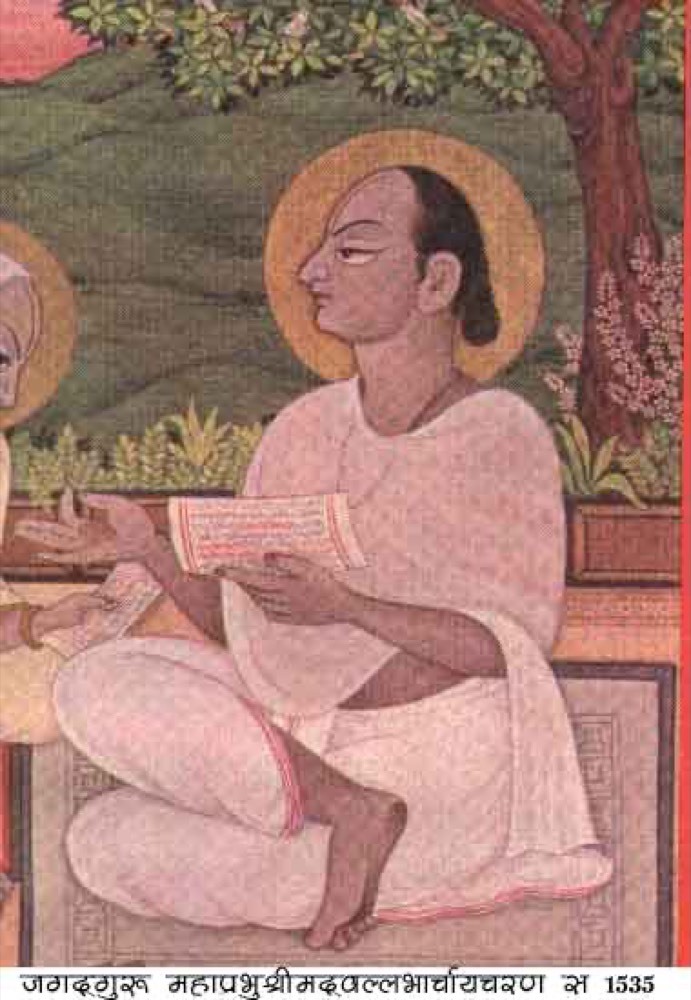
Do you want to feel the deepest, most real, and lasting happiness?
There’s nothing more powerful than seva - loving, intentional service to the Divine. One of Sanatan Dharma’s most beautiful paths centred on this idea is Pushtimarg, founded by Shri Vallabhacharya.
Vallabhacharya was born around 1479 CE in the forest of Champaranya, Chhattisgarh, to a Telugu Brahmin family.
Legends say his birth was marked by miracles during a family pilgrimage. From an early age, he displayed astonishing intellect - according to tradition, he mastered the key scriptures in just four months.
He grew up between Varanasi and Raipur, and spent years traversing India to revive Krishna Bhakti and debate Vedantic ideas.
His doctrine, Shuddhadvaita - Pure Non-dualism - declares that Krishna alone is the absolute Brahman, but the world and all souls are his real, inseparable parts (amsha). Liberation, in Vallabha’s vision, isn’t about escape; it’s about joining Krishna’s eternal play - Nitya-leela - through his grace and our devotion.
Around 1493, guided by a profound vision, Vallabhacharya identified and revealed the sacred image of Shrinathji at Govardhan Hill - a unique form of Krishna associated with the legendary lifting of the hill to protect the Vrajvasis. This became the living centre of Pushtimarg.
But Pushtimarg isn’t about rituals for their own sake. Vallabhacharya taught that we are nourished by Krishna’s grace, so true bhakti is intimate, personal seva: cooking, dressing, and caring for Krishna - often as a beloved child, but not only so. The bond is direct, familial, and utterly loving.
The genius of Pushtimarg was to make devotion possible within daily life. Followers, from Brahmins to traders and royals, built havelis - not mere temples, but homes for Krishna, filled with art, music, and food as offerings (samarpana).
Even today, devotees visit the 84 Baithaks - sacred seats where Vallabhacharya taught - and study the Shodasha Granthas, the sixteen original works he authored, which remain the foundation of Pushtimarg thought and practice.
The principal shrine of Pushtimarg is at Nathdwara, Rajasthan, where the same self-manifest (svarupa) Shrinathji deity from Govardhan resides and receives seva to this day.
Vallabhacharya’s legacy? True bhakti isn’t reserved for the monks and mystics - it begins at home, in your own living room, with daily, loving service to Thakurji.