Sri Aurobindo
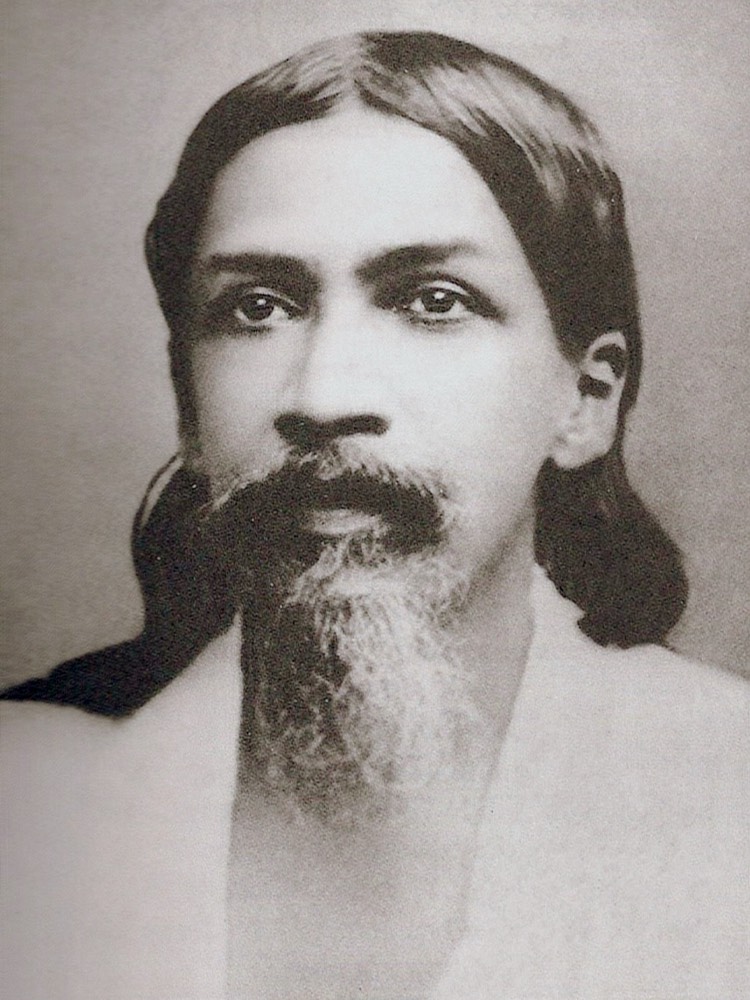
What’s the one true message of our ancient timeless Sanatan Dharma? Has someone in this current era cracked it? Yes!
This is the story of Sri Aurobindo - revolutionary, yogi, philosopher - who not only reminded us of the root essence of Sanātana Dharma, but also showed what real spiritual inclusivity looks like.
Born in Calcutta in 1872, Aurobindo Ghose was sent to England at age 7 by his father, a Western-educated doctor who believed in British intellectual supremacy. There he studied at St. Paul’s in London and King’s College, Cambridge - mastering Greek, Latin, French, and more.
But the nationalist in him was alive even there. He deliberately failed the riding test for the Indian Civil Service to avoid serving the Raj, and by 1893 returned to India to work in Baroda - where he immersed himself in Sanskrit, the Vedas, and India’s spiritual heritage while quietly building revolutionary networks.
By 1906, he was in Bengal, editing the nationalist paper Bande Mataram, allying with leaders like Bal Gangadhar Tilak and Bipin Chandra Pal, and training youth in both ideology and self-defence. In 1908, he was jailed for a year in the Alipore Bomb Case - and there, through deep meditation, he experienced what he described as visions of Lord Krishna, and even guidance from the spirit of Swami Vivekananda.
That was the turning point: freedom was no longer just political - it was part of a divine mission to revive the spiritual soul of India.
In 1910, after receiving what he called a divine “Adesh” or command, he left politics entirely and moved to French-ruled Pondicherry. For four years he went deep into meditation, crystallising his philosophy of Integral Yoga - a synthesis of karma, bhakti, jñāna, and rāja yoga. It sees all life as yoga, the Divine as universal, and our highest task as rising to a supramental consciousness - not escaping the world, but transforming it.
Through his journal Arya (1914–1921) he poured out thousands of pages - The Life Divine, The Synthesis of Yoga, Essays on the Gita, his reinterpretations of the Vedas and Upanishads, and his 24,000-line epic Savitri based on the Mahābhārata - all offering bold, systematic answers to the nature of consciousness, existence, and human destiny.
By 1926, he handed community leadership to his collaborator Mirra Alfassa - “The Mother” - who developed the Sri Aurobindo Ashram, still open to visitors today.
Their vision of Sanātana Dharma as the eternal, universal path embracing all faiths later inspired Auroville, now home to 3,000+ residents from over 59 countries, living in a model of human unity and sustainability.
Before leaving his body in 1950, Sri Aurobindo had elevated India’s freedom struggle from a political demand to a sacred duty - and given the modern world a reason to respect the depth of the Vedas and Upanishads. His ideas seeded the global spiritual movement we see today, from yoga to integral education to the idea of conscious evolution.
If you feel spiritually drawn today, chances are he helped plant that seed.
Share this, and follow to meet more Hindu thinkers who shaped our world.