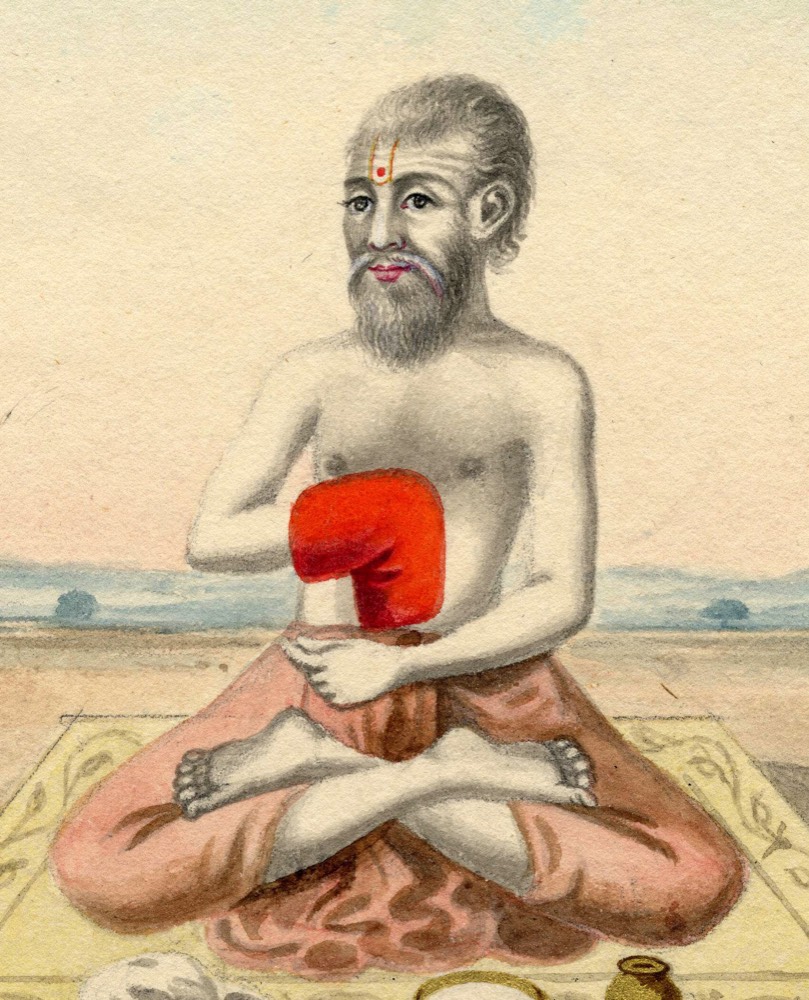
Kapila Muni
Ever wondered how the universe actually works?
One of the most detailed answers to its recipe comes from Hinduism’s ancient Sāṅkhya philosophy, taught by Kapila Muni - a sage some traditions call an avatar of Vishnu, and historians place around the 7th-6th century BCE.
Kapila wasn’t just a philosopher. He spoke against animal sacrifice, pushed for non-violence, and shifted focus from empty rituals to real understanding.
His Sāṅkhya says all of reality rests on two eternal ingredients:
1) Prakṛti - nature itself, the raw matter - energy of the universe, holding three building block forces in balance: Sattva (clarity), Rajas (activity), Tamas (inertia).
2) Puruṣa - the countless pure consciousnesses, one in every living being, eternal and untouched.
When Prakṛti “meets” Puruṣa, that balance tips.
The guṇas stir in the pot, and Prakṛti unfolds into everything we know, through the 23 or 25 tattvas i.e. base elements that come out from this mixture:
From Buddhi or Mahat (intellect), to Ahaṃkāra (ego), and Manas (the processing mind) … to our dnyanendriya senses, to the karmendriya organs of action, to the tanmantra subtle building blocks like sound or taste, and finally the five physical element mahabhutas: space, air, fire, water, and earth.
You’ll notice that there’s no Ishwara or personal creator-god here. Sāṅkhya is clear - freedom, or mokṣa, comes from viveka-khyāti, the sharp knowledge that “I am Puruṣa, not Prakṛti.”
When you truly see that, the noise of nature stops binding you. That’s kaivalya - the Self, free and alone in its pure awareness.
Kapila’s teaching was passed down through sages like Āsuri, Pañcaśikha, and Īśvarakṛṣṇa, whose Sāṅkhya Kārikā became the school’s classic text.
It shaped Yoga, influenced Nyāya-Vaiśeṣika and Vedānta, and even echoes through the Bhagavad Gītā.
Kapila Muni didn’t just explain the recipe of the universe - he gave a manual for getting free from it.