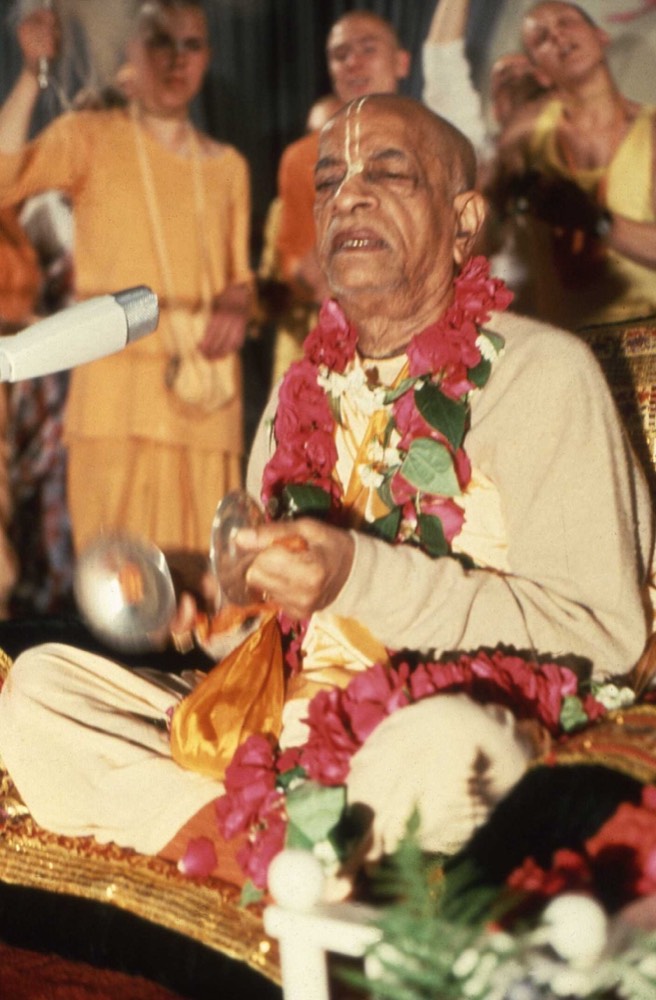
A.C. Bhaktivedanta Srila Prabhubadasri
You agree that every community needs leaders who can nurture & grow it?
One great case studies of spiritual leadership & smart marketing in Sanatan Dharma is A.C. Bhaktivedanta Swami Prabhupāda.
So here’s his story.
He was born as Abhay Charan De in 1896 in Calcutta, in a devout Gauḍīya Vaiṣṇava family - a tradition founded by Śrī Chaitanya Mahāprabhu in the 1500s that worships Śrī Kṛṣṇa as the Supreme Being.
From a young age, Abhay showed a flair for creative leadership - by organising public kīrtans, Ratha-yātrās, and prasādam festivals that drew people together in Krishna's name.
In 1922, he met his guru, Srila Bhaktisiddhānta Sarasvatī Ṭhākura, a reformer who had built dozens of Gauḍīya Maṭhas across India. He told Abhay that the real need of the hour was to spread Krishna-bhakti in the West.
He accepted initiation and was renamed Abhaya Charanāravinda - “the fearless one at the Lord’s lotus feet.” Years later, he took sannyāsa and was honored with the title “Prabhupāda,” given only to exalted ācāryas.
While his commentaries on the Bhagavad-gītā and Bhāgavatam gained followers in India, he was quietly preparing for something far bigger.
In 1965, at age 69, with no money, no contacts, and just a crate of books, he boarded a cargo ship to America. He suffered two heart attacks at sea. But once in New York, he began holding public chanting sessions in parks and offering classes on Krishna’s teachings.
So ISKCON - the International Society for Krishna Consciousness - was born. With pure devotion, gritty persistence, and timeless wisdom.
Earlier Indian gurus like Swami Vivekananda and Paramahansa Yogananda had introduced Advaita to the West. But Prabhupāda’s brilliance was different - he gave people a God they could talk to, serve, love, and even dance with. Krishna was made relatable.
And he was strategic. He initiated over 5,000 disciples, created a formal spiritual structure, and set up publishing trusts, farms, restaurants, and schools - all while circling the globe 14 times and planting seeds of bhakti in over 100 countries.
He made mantra meditation go mainstream, normalised vegetarianism, and built a global community - not of consumers, but of spiritual practitioners.
Today, ISKCON has over 500 temples, thousands of monks, and millions of members serving and chanting across continents.
Sure, like any institution, it has its flaws and controversies. But for Gen-Z Hindus, ISKCON is a masterclass in global community-building, content marketing, and culture-rooted innovation.
Learn from it. Reflect on it.