Former IAS officer asks Supreme Court to quash six-stanza Vande Mataram orders, calling the added verses a religious invocation
A separate plea to give the song equal status with the national anthem is listed before the Chief Justice's bench on 27 October.
- News18
- Hindustan Times (PTI)
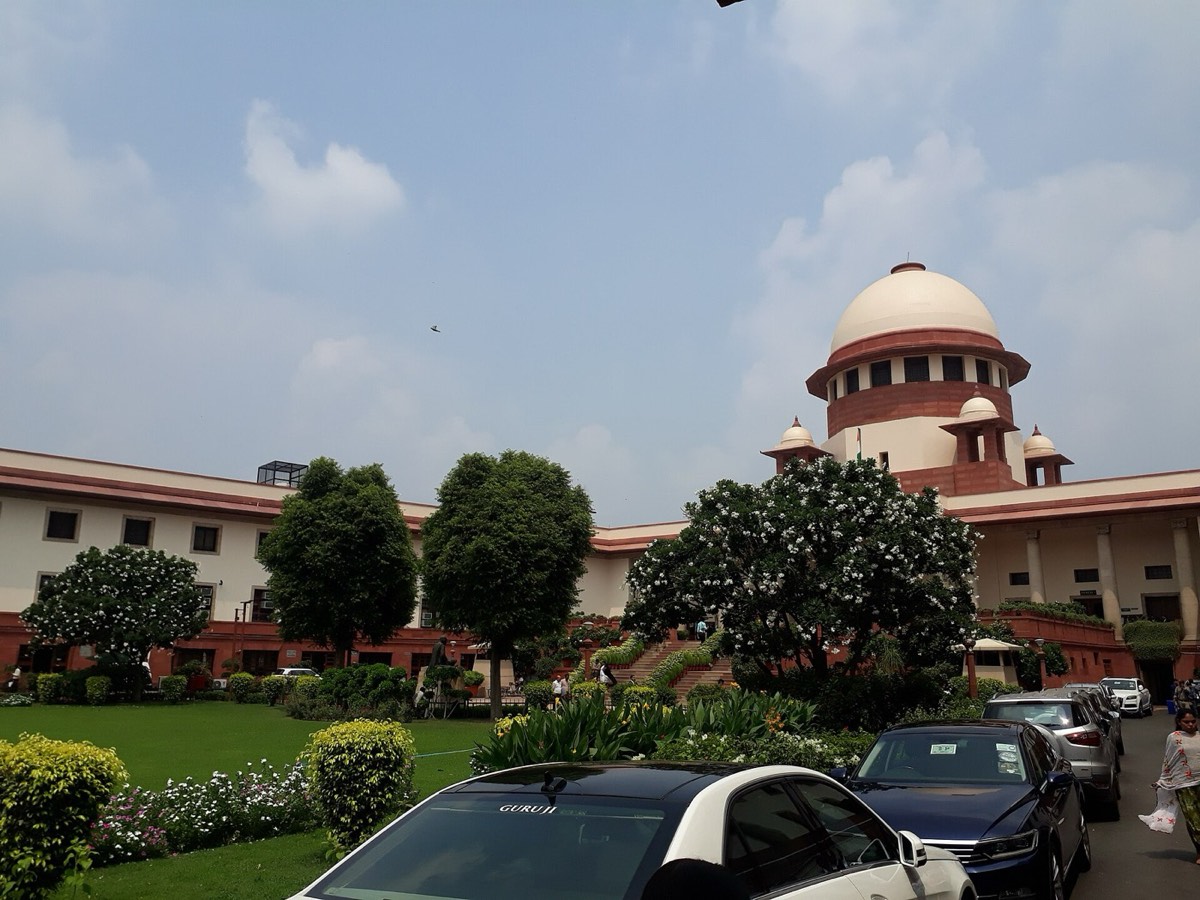
Former IAS officer Balakrishnan Sathyabhama Mavoji has moved the Supreme Court against Ministry of Home Affairs orders that prescribe the extended six-stanza Vande Mataram, drawn from Bankim Chandra Chattopadhyay's 1882 novel Anandamath, as the official National Song, News18 reported. The writ petition seeks the quashing of executive orders issued on 28 January and 9 July.
It argues that the original two-stanza song was written in the early 1870s as an independent ode to the motherland, before it was placed in the novel. According to the petition, the later stanzas frame the song as a battle cry devoted to specific deities and turn it into a religious invocation.
The plea says compelling citizens to sing or play the full version breaches Articles 14, 19, 21 and 25, and that the freedom of expression includes a right to stay silent. It asks that respectful non-participation not be treated as an offence or disrespect, and seeks a mandamus against mandatory performance at state functions and in schools.
News18 said similar challenges have been filed by Carnatic vocalist T.M. Krishna and by a Buddhist leader, and that the court has orally observed that those who abstain for genuine religious or conscientious reasons should not face penalties. On the other side of the debate, the Supreme Court is likely to hear on 27 October a plea by advocate Ashwini Upadhyay to transfer to itself his Delhi High Court PIL seeking equal status for Vande Mataram and Jana Gana Mana, PTI reported.
A bench of Chief Justice Surya Kant and Justices Joymalya Bagchi and V. Mohana is to take it up. Upadhyay's PIL also seeks directions for both songs to be sung in all schools on every working day.
Key data
MHA orders dated 28 Jan and 9 Jul under challenge. Anandamath published 1882; original two stanzas written in the early 1870s. Articles 14, 19, 21 and 25 invoked. Upadhyay transfer plea listed for 27 Oct.
Why it matters
The case asks the court to decide whether verses that hymn the motherland as Durgā are devotional or civic, a question that goes to the heart of how Hindu imagery sits within national symbols. The ruling will set limits on compelled participation in either direction.
GK: did you know?
On 24 January 1950 the Constituent Assembly, through a statement by its President Rajendra Prasad, gave Vande Mataram honour equal to Jana Gana Mana as the National Song.