Bengal's "only Sanātanīs may touch Durgā idols" rule draws opposition fire as immersions run without cranes and DJs
About 2,800 idols were immersed in Kolkata on Wednesday on rail trolleys instead of cranes, as critics asked who decides who is a Sanātanī.
- News18
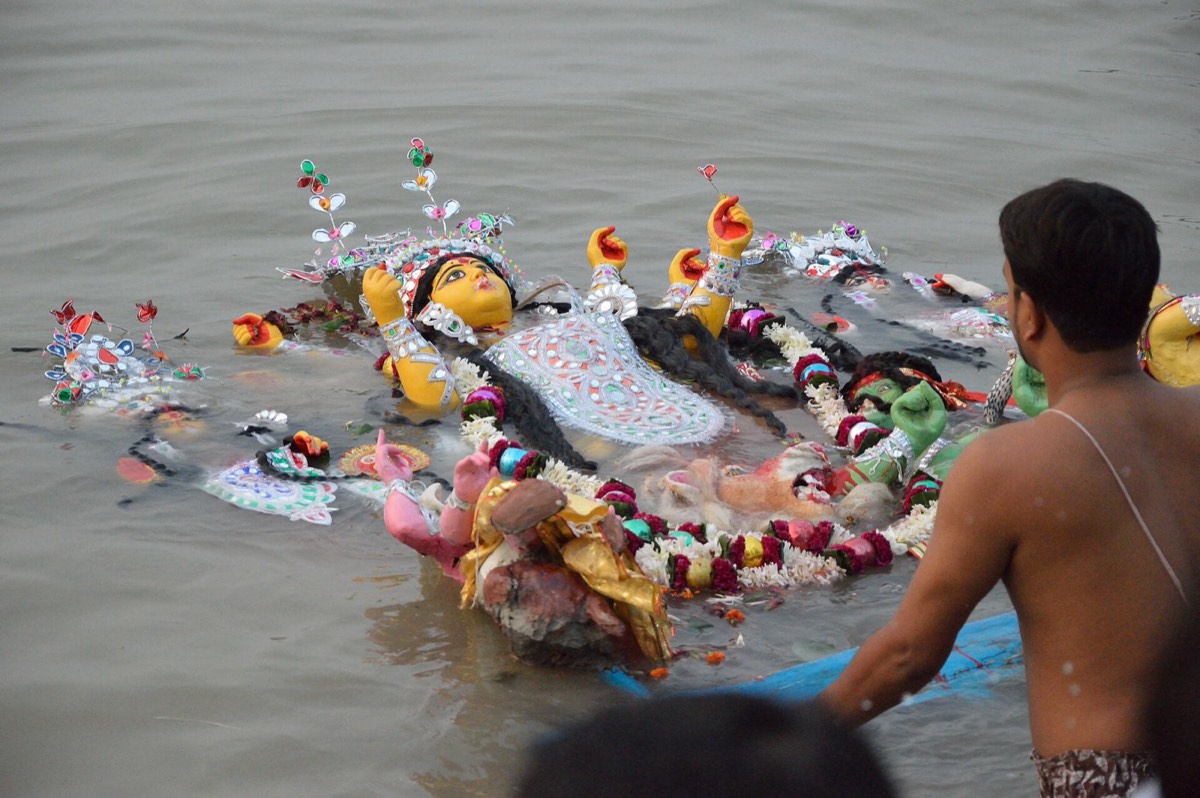
West Bengal Chief Minister Suvendu Adhikari said on Wednesday that only those who believe in Sanātana Dharma would be allowed to touch Durgā idols during immersion, News18 reported. He made the remark while reviewing arrangements at Baje Kadamtala Ghat and said Kolkata Police Commissioner Ajay Nand had been told to record the names of people taking part and to identify them.
"To preserve sanctity, we must follow traditions, scriptures and norms followed for thousands of years," Adhikari said, rejecting suggestions of a communal motive. Former CPI(M) MP Bikash Ranjan Bhattacharya asked, "Does he have a list of who is a 'sanatani' and who is not?" and alleged the order followed the RSS agenda.
Congress leader Suman Roy Chaudhuri said the remarks went against the Constitution's commitment to pluralism, and Trinamool leader Baiswanor Chatterjee said, "One cannot understand Hinduism with such a narrow mindset." Earlier, the Chief Minister had cited tradition to replace cranes with trolleys for lowering idols and to ban DJ music.
At the ghats on Wednesday, rail-mounted trolleys, mechanical ramps and conveyor systems were in use at Baje Kadamtala, Nimtala and Gwalior Ghat, and loud speaker music was largely absent. Environment activist Naba Dutta of Sabuj Mancha welcomed the DJ ban, saying his group's demand had been met for the first time.
Kolkata Municipal Corporation sources said about 2,800 idols were immersed on Wednesday, including about 700 at Doighat and 560 at Baje Kadamtala. Heaps of idol frames were still at Baje Kadamtala on Thursday afternoon, which a civic official put down to low tide.
Key data
About 2,800 idols immersed on 21 Oct: about 700 at Doighat, 560 at Baje Kadamtala. Cranes replaced by rail trolleys; DJ music banned.
Why it matters
A state government is now deciding who may handle an idol during visarjana, which raises a question the tradition itself never settled by decree. The rule is likely to be tested in court, while the quieter, crane-free immersions show what a ritual-first approach can change.
GK: did you know?
Visarjana in Sanskrit means sending off or bidding farewell; in Durgā Pūjā it follows the Daśamī rites that bid the Devī farewell until the next year.