Samarth Ramdas Swami
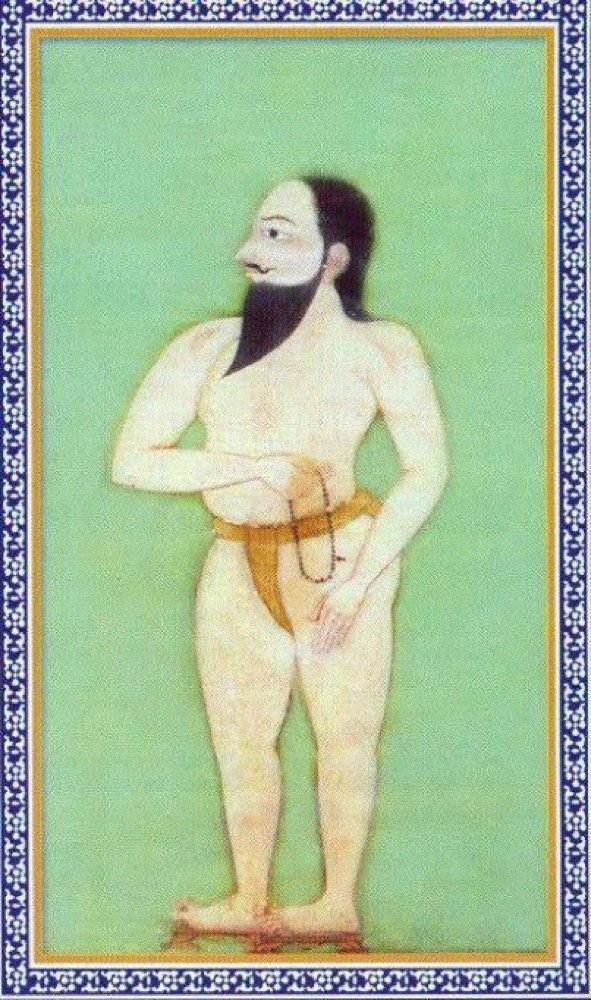
What if I said that fighting is the best form of spirituality? We had a great saint who taught us to balance peace with action - that’s Samarth Ramdas Swami & here’s his story.
Samarth Ramdas was born as Narayan Thosar (नारायण ठोसर) in 1608, on Ram Navmi (राम नवमी), in the village of Jamb (जांब) near today’s Jalna in Maharashtra, in a Deshastha Rigvedi Brahmin (देशस्थ ऋग्वेदी ब्राह्मण) family. His father died when he was still a child, and very early he was drawn to Ram (राम)–bhakti.
According to the old Marathi accounts, when his marriage was fixed around the age of 12, he ran away from the wedding fire to choose a monk’s life instead.
He then spent over a decade in intense tapas near Nashik (नाशिक) - especially at Takli (टाकळी) and Panchavati (पंचवटी) - living on alms, meditating in the Godavari, and repeating “Shri Ram Jai Ram Jai Jai Ram (श्री राम जय राम जय जय राम)”. By his mid-twenties, he had taken a vow of lifelong brahmacharya (ब्रह्मचर्य), called himself “Ramdas - servant of Ram”, and saw Ram alone as his guru.
In the early 1630s, he set off on a long Bharat–yatra, travelling from north to south India. On that journey he saw how ordinary Hindu communities were squeezed by the wars, taxes and bigotry of the time under Mughal and Deccan sultanate rule.
Somewhere near Srinagar in Garhwal, he met the sixth Sikh Guru, Guru Hargobind (गुरु हरगोबिंद). Ramdas asked him why a successor of Guru Nanak lived like a warrior-king. Hargobind replied that a saint can be “internally a renunciate, externally a prince – अंतर संन्यासी, बहिर राजा (antar saṃnyāsī, bahir rājā)” - weapons exist to protect the weak and punish tyranny.
That meeting sharpened Ramdas’s conviction: you can sit with God inside, but you must still fight for dharma outside.
So in 1644, he came back to Maharashtra and deliberately started a movement to revive Hindu confidence - using huge Ram Navmi celebrations to bring people together and put Ram back at the emotional centre of public life.
Through what later came to be called the Samarth sect (समर्थ संप्रदाय), he built a dense network of mathas (मठ – monasteries), Rama temples and especially Hanuman (हनुमान) temples across Maharashtra.
These weren’t just quiet prayer spots - many of them ran free food for travellers and the poor, and functioned as akhāḍās (अखाड़ा): gymnasiums and training grounds where young men learnt wrestling and weapons, seeing fitness itself as Hanuman–seva.
Ramdas and Chhatrapati Shivaji Maharaj (छत्रपति शिवाजी महाराज) moved in the same region and time. Historical records show Shivaji granting land and honours to Ramdas’s institutions, and later tradition in Maharashtra remembers Ramdas as one of the saints who inspired the vision of Hindavi Swarajya (हिंदवी स्वराज्य) and Ram Rajya (रामराज्य) - a kingdom that protects dharma and its people.
Modern historians debate the exact “personal guru” label, but nobody disputes that his ideas and institutions fed directly into the Maratha spirit of resistance.
As a writer, he was a beast. His book “Dasbodh (दासबोध)” is a brutally practical guide to spiritual life, leadership and self-mastery - mixing Vedanta with hard-core life advice. His “Manache Shlok (मनाचे श्लोक)” are 205 verses talking straight to your own mind, still recited daily in many Marathi homes. And popular aartis (आरती) and stotras (स्तोत्र) used in Ganesh puja (गणेश पूजा) and Hanuman worship are traditionally credited to him.
By the 1660s, he had effectively built a movement that demanded inner stillness with outer participation – meditate deeply, but also train your body, organise your community, and actively protect dharma.
He pushed for social reform within that framework - criticising laziness, corruption and petty caste fights, supporting devoted women disciples as math -heads, and speaking bluntly about the need to save Dharma without apology.
Finally, around 1681–1682, at Sajjangad (सज्जनगड) near Satara, he consciously prepared for mahā-samādhi (महासमाधि), giving up food and water while immersed in “Shri Ram Jai Ram Jai Jai Ram”. His samadhi is still there at Sajjangad - and if you visit, you’ll understand why people say you can still feel his tejas (तेजस्).
Samarth Ramdas Swami is living proof that true spirituality isn’t escape. It’s accepting your role in society and serving it fiercely and joyfully.