Patanjali
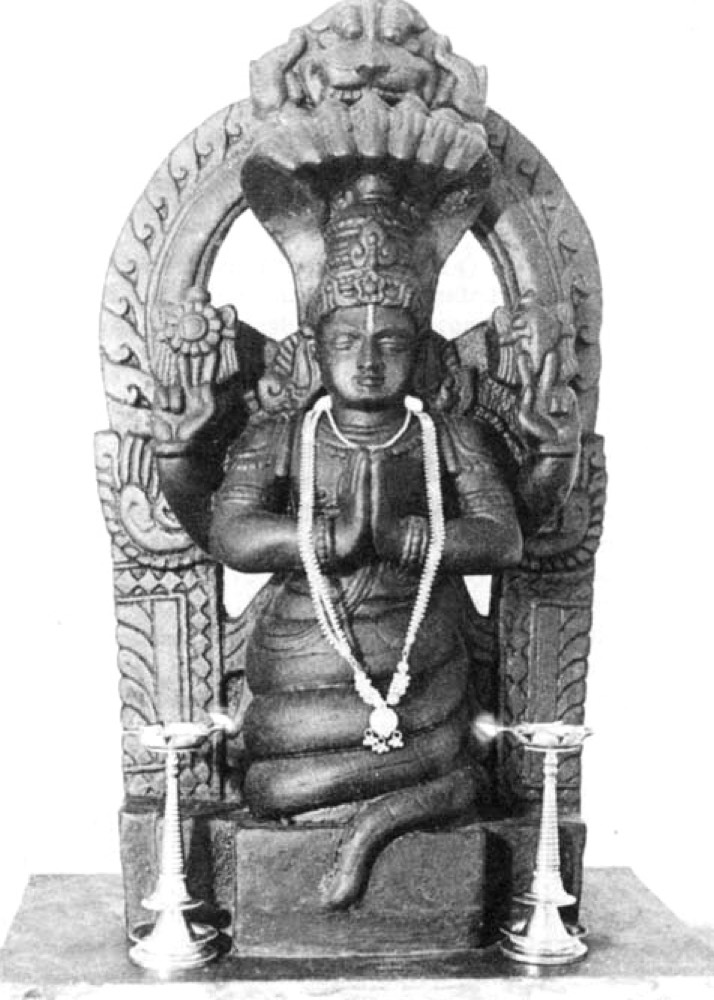
If you’ve ever done Yoga, you need to thank one man - yes, that’s Patanjali.
We’re on Episode 46 of “100 Hindu Icons” - spotlighting the thinkers who kept Sanatan Dharma alive.
Now, the interesting bit is that “Patanjali” actually likely refers to more than one historical figure. One Patanjali wrote the योगसूत्र (Yoga Sutras); another, centuries earlier, wrote the महाभाष्य (Mahabhashya) on Panini’s grammar. And there’s also a Patanjali credited to synthesising Ayurveda.
Over time, they got fused into a single icon.
The most famous yogic Patanjali’s date is uncertain - best placed somewhere around the early centuries, with strong academic arguments focusing near ~400 CE; broader estimates span roughly 2nd c. BCE to 5th c. CE.
His origin story is mythic - as an incarnation of Ananta Shesha Naag, he “pat” i.e. “falls” into the cupped palms (anjali) of the yoginī Gonika - hence the name, “Pat-añjali.”
Long before him, Yoga practice was already existign & the people had heard about सांख्य (Sankhya) philosophy, which splits creation into raw pure consciousness (पुरुष, Purusha) and temporary material nature (प्रकृति, Prakṛti), the goal of life being to realise we are Purusha, not Prakriti.
Patanjali’s genius was in systematically compiling & organizing this sprawling tradition into concise teachings aimed at one goal - चित्त-वृत्ति-निरोधः (citta-vṛtti-nirodhaḥ), stilling the fluctuations of mind. In doing so, he formalised Yoga as a Darshana, an approach towards life.
His Yoga Sutras is in four Padas: Samadhi, Sadhana, Vibhuti, Kaivalya - moving from the nature of meditative contemplation, to disciplined practice, to the allure (and risks) of siddhis, and finally to kaivalya, isolation/liberation of Purusha.
His most popularly curated system is Ashtanga - the eight limbs:
1) यम (yama: restraints like अहिंसा/ahiṃsā)
2) नियम (niyama: observances like शौच - cleanliness)
3) आसन (asana: steady, easeful posture)
4) प्राणायाम (pranayama: regulated breath)
5) प्रत्याहार (pratyahara: withdrawal of the senses)
6) धारणा (dharana: concentration)
7) ध्यान (dhyana: uninterrupted meditation)
8) समाधि (samadhi: absorption)
Either him or someone with the same title & name is also credited to compiling the the Mahabhashya, a commentary on the work of grammarian Panini, which is still a central text in learning Sanskrit & the language of Vedic scriptures.