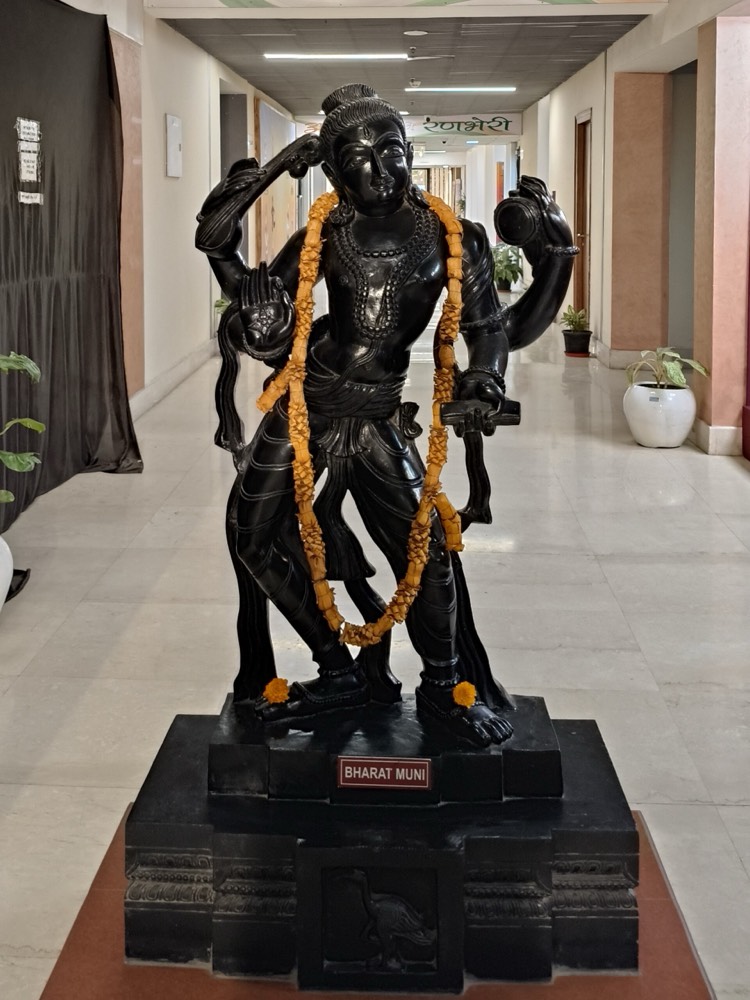
Bharata Muni
You remember the emotions from Inside Out?
We actually had similar characters in our culture thousands of years ago in the rasa theory of Bharat Muni, so here’s his story.
Bharata Muni lived somewhere between 200 BCE to 200 CE in the cultural renaissance of India during the Mauryan & Gupta empires.
It’s said he was guided by Brahma, to compile the world’s first formal textbook on the art of performance, Natyashastra.
In India, performing arts or acting aren’t purely entertainment, they has sacred value as theatre developed as the 5th Veda - to teach difficult high philosophical concepts to the masses.
Bharata Muni’s Natya Shashtra has 6000 verses, spread in 36 chapters that cover technical aspects like theatre construction, props, lighting, scenery, etc.
He explains the 5-act traditional structure of a play.
And he also lays down music & dance theories, from nodes i.e. ragas, to rhythmic patterns i.e. talas, to hand gestures i.e. mudras, footwork, etc.
He explains the techniques actors must use, such as mukhabhinaya (facial gestures), voice modulation (vachikabhinaya), bodily movement (kayikabhinaya), costume (aharya) & inner emotion (sattvika).
At the core of this is the theory that theatre can evoke specific emotional states in audiences, which are the 8 original rasas -
+ Shringar (erotic love)
+ Hasya (comic, humour)
+ Karuna (compassion or sadness)
+ Raudra (furious, anger)
+ Vira (heroism)
+ Bhayanaka (fear)
+ Bibhatsa (disgust)
+ Adbhuta (wonder)
And a later added one, Santa (peace).
Bharata Muni’s work laid the foundation for art & theatre to develop around the world - his theories are still used today in various cultures & were used by great playwrights like Kalidasa to introduce stories from our Dharma to the masses.
So the next time you see a live performance, play or any form of art on stage - you know who to thank!